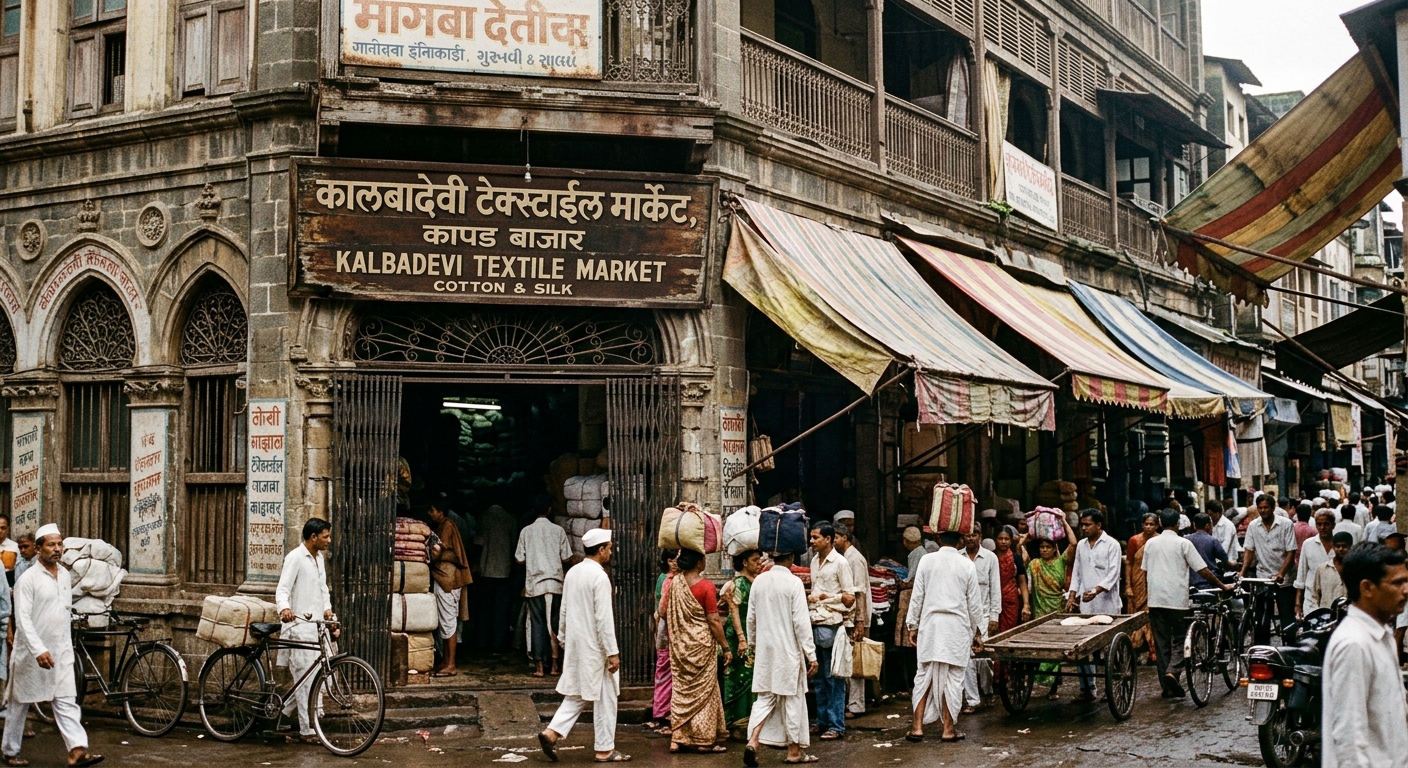
Est. 1956
Our house.
Ramanlal Bajaj arrived at Mulji Jetha Market in the monsoon of 1956, nineteen years old, with a borrowed trunk and two letters of introduction from weavers in Surat. He had no shop. He had a relationship with the cloth.
He started as an agent, carrying samples between Kanchipuram buyers and Bombay families preparing for weddings. Within four years he had a narrow shop on the ground floor of a building that still stands. He called it Bajaj Sarees, because the name was simple and true.
Three generations have sat behind this counter. His son Deepak added direct relationships with Banarasi and Paithani weavers in the 1980s. His granddaughter Priya now manages the bridal programme, which she rebuilt around a single rule: the family sees the saree before it leaves the shop, draped, on a body, in daylight.
We do not stock sarees we have not touched. We do not buy from agents. We do not discount. We have been to the looms in Kanchipuram, Varanasi, Yeola, and Patan. We know the weavers by name, and they know us.
A Bajaj Sarees saree is the same saree it would have been in 1956, in every way that matters.
Timeline
Six decades, by our hands.
1956
A borrowed trunk in Kalbadevi
Ramanlal Bajaj opens a narrow shop on Mulji Jetha Market, trading Kanchipuram and Surat silks directly to Mumbai families.
1971
First Paithani commission
A Pune family requests a bridal Paithani with a specific peacock motif. Ramanlal travels to Yeola and sits with the weaver for two days. The saree takes six months.
1984
Banarasi relationships begin
Deepak Bajaj makes his first trip to Varanasi and establishes direct accounts with three weaving families in Madanpura. No middlemen, then or since.
1998
Silk Mark certification
One of the first retailers in Mumbai to be certified under the Silk Mark scheme. We have renewed every year.
2014
The bridal programme
Priya Bajaj redesigns the bridal consultation: private appointments, daylight draping, three outfit co-ordination sittings. Fourteen commissions a year, by design.
2026
This site. This conversation.
We step online, with the same relationships and the same shop at Mulji Jetha behind everything.
The Weave
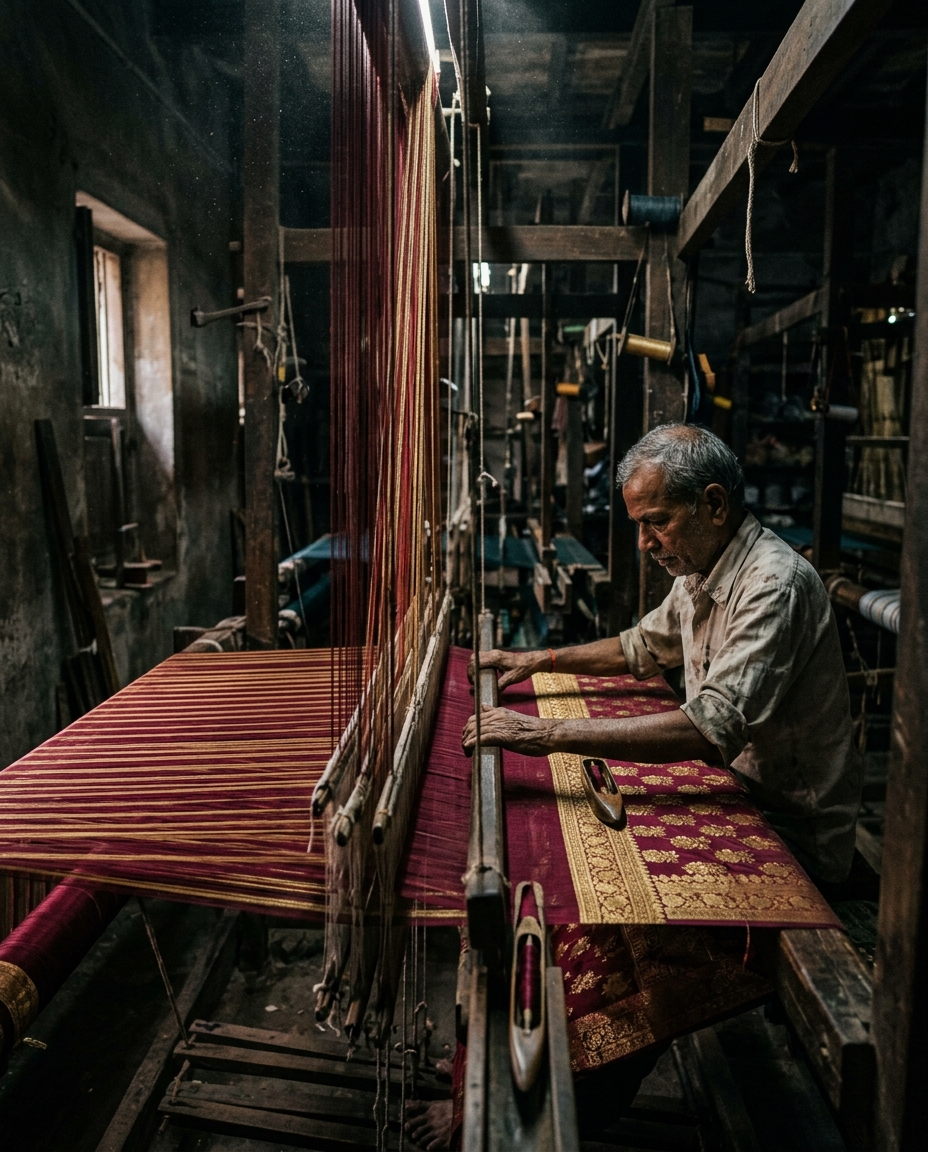
One saree. Six pairs of hands.
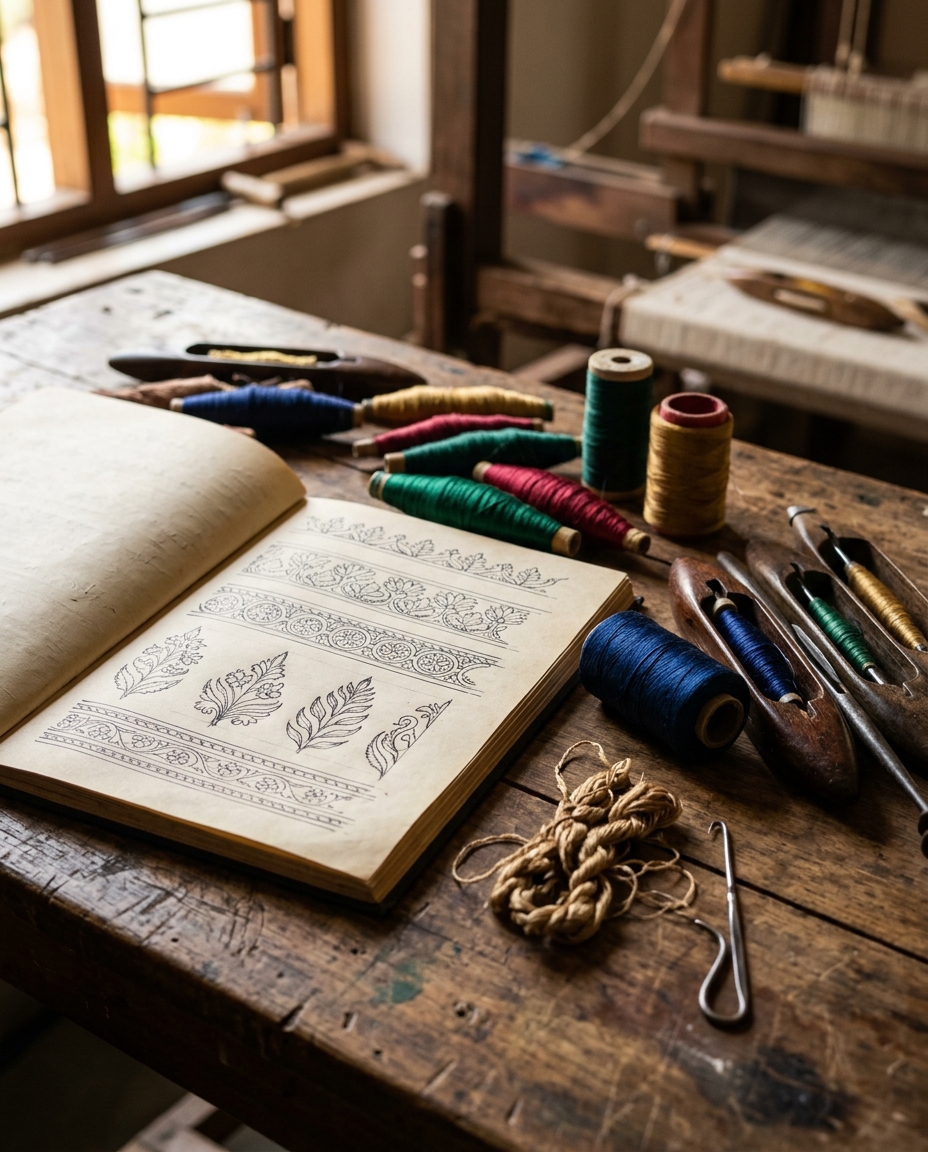
Every saree we carry is woven by the same families we have sourced from for thirty years. We visit the looms. We see the thread on the bobbin. We carry nothing that has not passed Ramubhai Master's silk-burn test.
Into the shop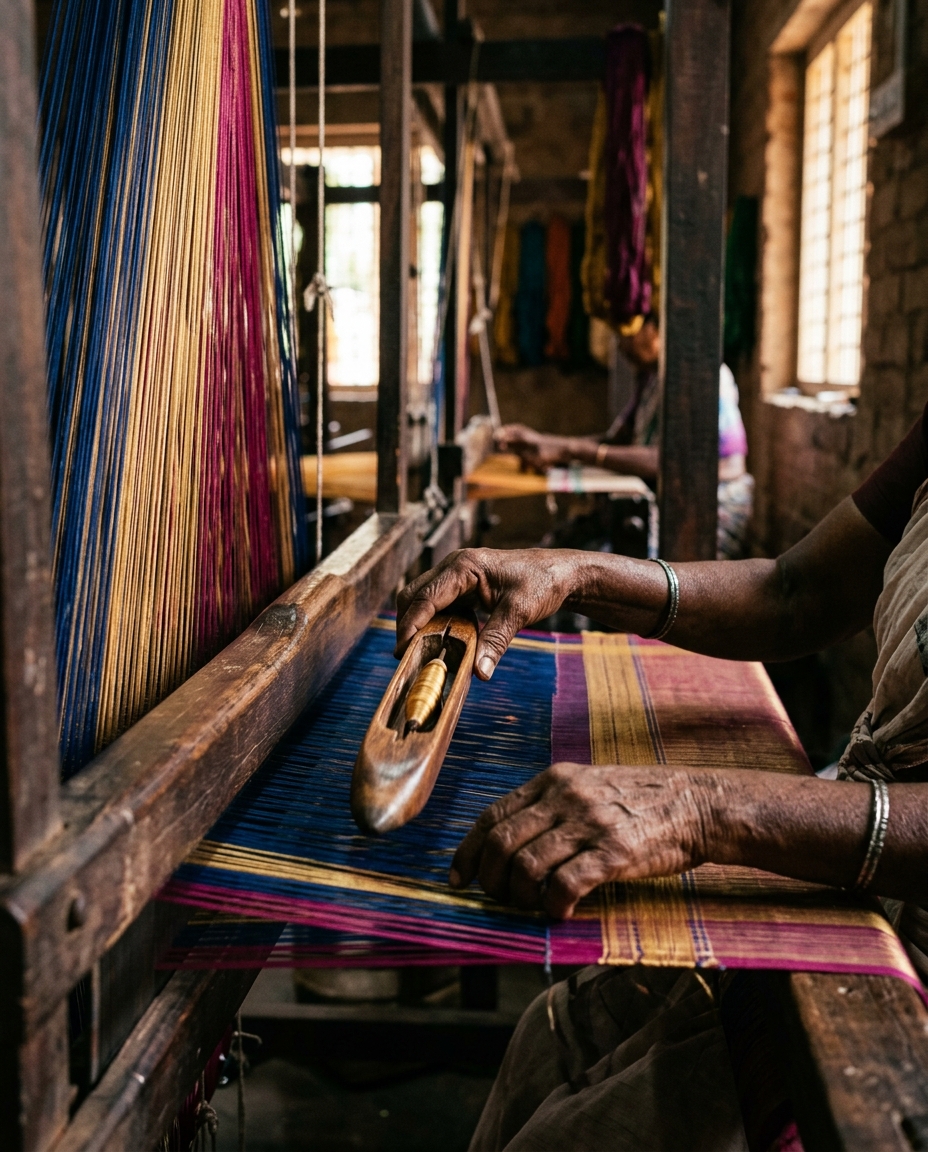
The Silk Letter
New arrivals, before the shop floor.
When a new lot arrives from Kanchipuram or Banaras, letter readers hear first. Four letters a year, from Kalbadevi.